
LANDOWNER
“We mainly live from dairy farming and forestry. The property covers an area of 4.5 hectares. My ancestors on my mother’s side settled here in 1694. So yes, we probably came to Snåsa to stay.”
Landowner Peter Finsås hides a modest smile behind his coffee cup, which almost disappears in his huge hand, while squinting out towards the partially frozen Lake Snåsa. The shadow of a sparrowhawk draws a perfect circle on the frost-covered ground. The tracks of a hare disappear beneath a juniper at the edge of the forest.
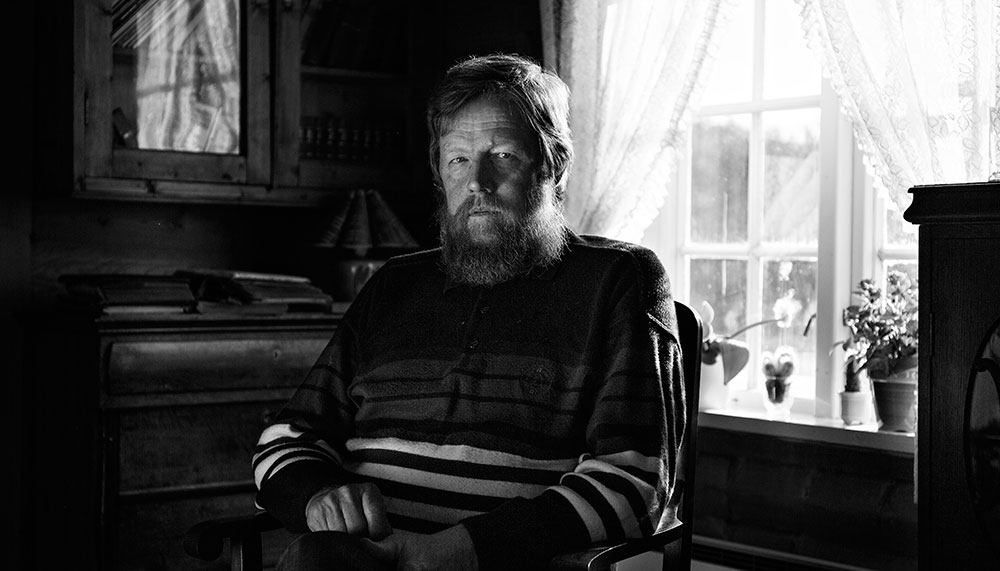
Peter Finsås (photo) is one of the two landowners involved in our projects. The Finsås family came to Snåsa in the 17th century. Peter Finsås runs the family farm as a traditional farmer.
“We were originally a family of pastors. Bernt Julius Muus is probably the best known. He emigrated to the United States at the end of the 19th century and founded St. Olaf College. That was the wave of emigration Snåsa experienced: more than 500 inhabitants, mainly young workers, left. Since the 1950s, the population has once again steadily declined. So much has been moved away, centralized, and jobs have disappeared.”
Finsås’ face lights up: “Mohamed does everything against the current. He goes to the places everyone else leaves. When he told me he wanted to sell water … well, I did have some questions. Like everyone around here, water was something I took for granted. If I was thirsty, I bent down and drank from the stream. Water gives life. We have rich wildlife.”
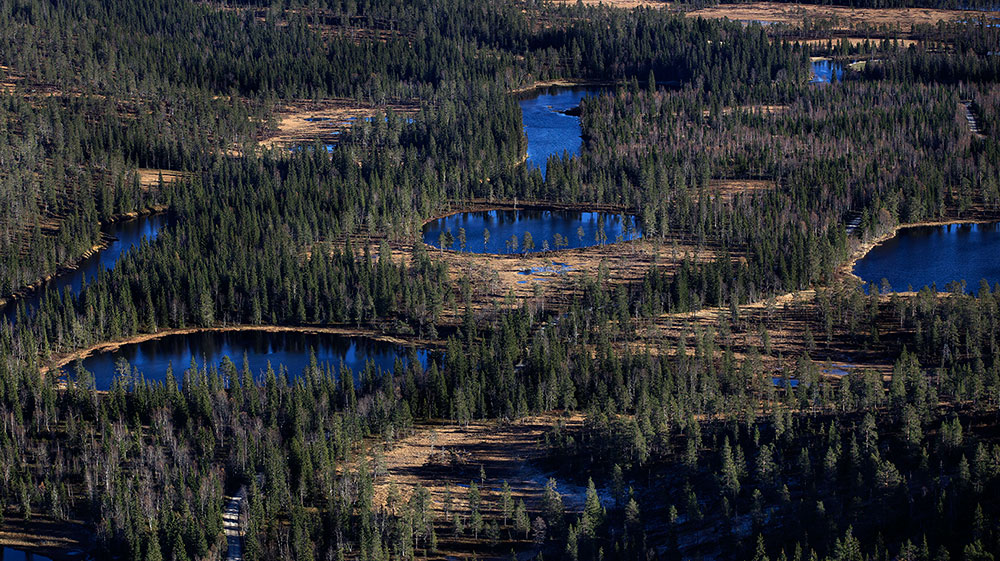
A municipality with more lakes than people. Snåsa has 2,500 lakes and 2,100 inhabitants.
Finsås lists them off: “Moose, reindeer, red deer, roe deer, foxes, mink, martens, black grouse, hazel grouse, capercaillie, rock ptarmigan, willow ptarmigan, squirrels, roaming wolves, lynx, wolverines … and many others. Not to mention the flora. You know, there are only about 2,100 of us here in Snåsa, but we have 2,500 lakes. You don’t find that elsewhere, and I quickly understood that Mohamed had a vision, and that his idea was worth thinking about. Since then, I have supported the idea.
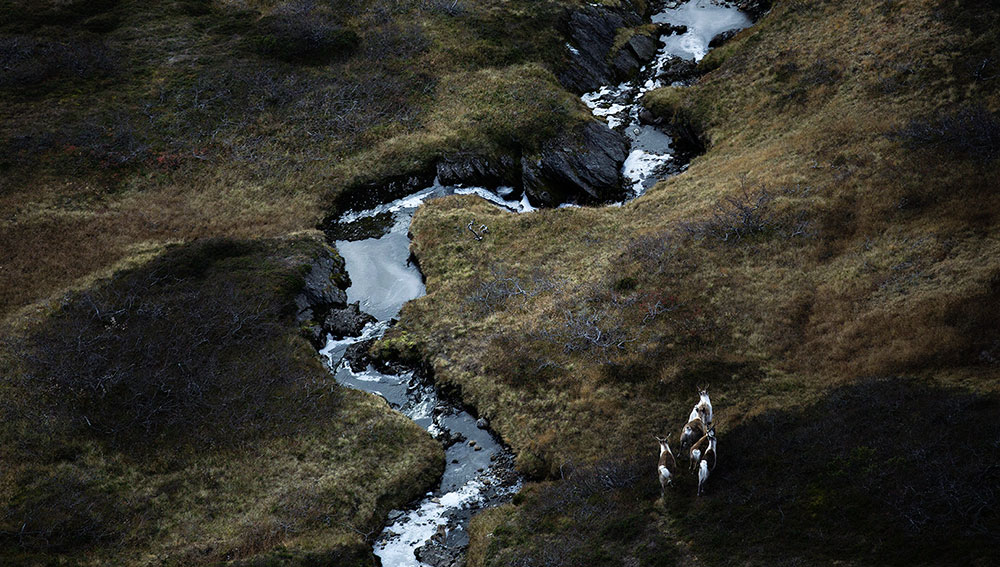
Blåfjella-Skjækerfjella National Park, which covers a large part of the eastern area of Snåsa municipality, is known for its rich natural resources, wildlife and flora.
Anyone who can create jobs is an asset to the village and the municipality. If they need to use the land I own, I will not oppose it. I chair the board of the museum, I know a little about the history of the area, and lately I have started thinking about a certain Elise. She was an old lady, born in 1894, very close to here at Hårråmyra, near the Snåsa source. She always said there was gold in the ground. I don’t know where she got that idea from; no one really took her seriously, but she always said it. Now, looking back, I think that perhaps the water was the gold!”
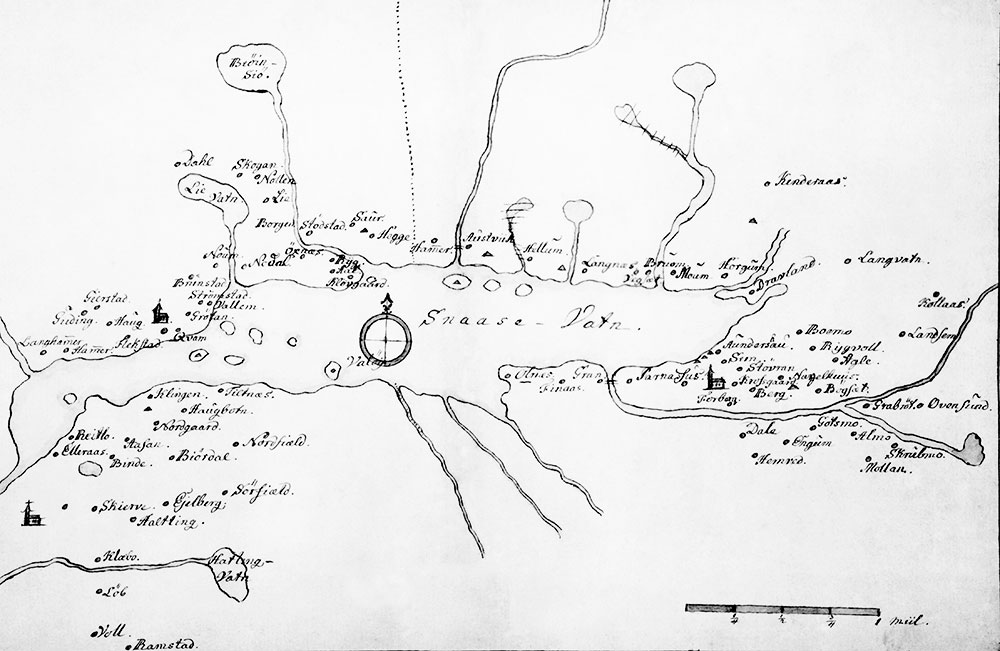
Lake Snåsa, the sixth largest lake in the country, is partly located within the municipality. Other lakes include Andorsjøen, Bangsjøene, Grøningen, Holderen and Store Øyingen. The image is reproduced courtesy of the Norwegian Museum of Cultural History.